
Water Treatment & Distribution
The Town of Petawawa has contracted the services of the Ontario Clean Water Agency (OCWA) to maintain and operate both the Wastewater Facilities as well the Water Treatment Facilities.
Petawawa’s water treatment facility was upgraded to a state of the art, fully automated plant in 1993. Thanks to the forward thinking Council of the day, residents of the community have the benefit of using water that complies with and surpasses the highest drinking water standards in the industry. The process consists of flocculation, sedimentation, clarification, and filtration, and finally, chlorination. All of these modern day processes are in place to ensure the highest quality drinking water.
Located on the southern shore of the Ottawa River and surrounded by Garrison Petawawa, the facility is rated at 21,500 cubic metres/day and, at present day, is running at less than half of its rated capacity. All aspects of the treatment process are continually monitored and alarmed, 24 hours per day, seven days per week. Routine samples are collected and analyzed for microbiological, chemical, volatile organics, inorganics and pesticides on a daily, weekly, monthly and yearly basis
Water & Wastewater Rate Studies and Water Financial Plans
Annual Water Reports
Copies of annual water reports can be downloaded below and are also available at Town Hall at 1111 Victoria Street, Petawawa.
Further information on the Ontario Drinking Water Regulations can be found on the Ministry of the Environment, Conservation and Parks website.
Annual Wastewater Reports
Copies of annual wastewater reports can be downloaded below and are also available at Town Hall at 1111 Victoria Street, Petawawa.
Further information on the Ontario Drinking Water Regulations can be found on the Ministry of the Environment, Conservation and Parks website.
History
In 1963, the Ontario Resources Commission entered into an agreement with DND for the Base Water Pumping Station to supply 2,050 m3/d to the Village of Petawawa.
In 1968 a Water Treatment Plant was constructed by DND, a class 3 direct filtration plant.
In 1976, the Ministry of the Environment requested the water quota to the Village of Petawawa be increased to 3,180 m3/d of its 14,500m3/d capacity. This request initiated several studies into the need for system expansion.
In 1989, the Department of National Defense announced an expansion to Garrison Petawawa and their intent to recall the water quota allocated to the Village of Petawawa. The Village of Petawawa was then given the option to own and operate the plant and pay for the upgrading needed to provide the additional capacity for their use.
October 30,1992, the contract was awarded for the expansion of the Water Treatment Plant.
The present plant has a rated capacity of 21,500 m3/d and is located on Lot 26, Lake Range, Town of Petawawa on the southern shore of the Ottawa River surrounded by Garrison Petawawa.
Quality Control & Compliance
This plant provides multiple barriers against bacteriological contamination. Bacteriological testing is carried out on raw water, treated water and distribution samples on a regular frequency. On-line analyses for chlorine residuals and turbidity ensure continuous monitoring of water leaving the plant. Chlorine levels in the distribution system are also checked on a regular basis. More specialized testing occurs monthly and quarterly checking for pesticides, heavy metals, disinfection by-products, volatiles and organics.
Petawawa Net Zero Project
The Petawawa Net Zero Project will transform the existing Petawawa Water Pollution Control Plant (WPCP) into a Resource Recovery Facility by upgrading its anaerobic digesters to divert waste from landfill and boost biogas production for use as electricity, making the plant energy neutral or positive (Net Zero), and reducing GHG emissions. This will involve the utilization of biogas in a Combined Heat and Power (CHP) unit for the purpose of making the WWTP Net Zero. The project also aims to find beneficial usage of remaining biogas as clean fuel in the future.
The Project has previously undergone stakeholders outreach under the name of “Petawawa Co-digestion and Energy Generation Feasibility Study” in 2019. The project received a grant of $2.7 Million from Low carbon Economy Challenge Fund in November 2019 under name “Petawawa Wastewater Treatment Plant (WWTP) Energy Recovery and Waste Diversion Net Zero Project”.
The Project is situated within the Petawawa Water Pollution Control Plant, located at 560 Abbie Lane, Petawawa, County of Renfrew, K8H 2E6 (Site). The Site has an area of 75.3 acres and is registered as Range Lake Lot 17 RP, Petawawa, and County of Renfrew; roll number 477907902006900.
LEARN MORE HERE
Treatment Processes
The plant’s water treatment process consists of the following:
- 278.4 m3 raw water well
- Three low lift pumps rated at 22,910 m3/d
- 4.65 m3/d rapid mix tank
- 595 m3/d flocculation tanks
- 458.3 m2 Clarifiers
- 1,650 m3 clearwell
- Three high lift pumps rated at 20,945 m3/d
- Wastewater clarifiers that discharge settled sludge to the sanitary sewer
Raw Water Source
The source of water treated by the Petawawa water plant is the Ottawa River at a widening in the river called Allumette Lake. The 760 mm diameter intake pipe extends 490m into the river at approximately 6m +1- under the surface and 1.5m off of the bottom of the river. This raw water intake pipe has a capacity of 21,500 cubic meters per day, gravity fed to the raw water well, and is supported at the end with a concrete and timber crib.
Screening
A vertical stainless steel coarse screen in the Raw water well of the low lift area of the building removes any large debris such as weeds, fish, etc.
Low Lift Pumps
There are three low lift pumps that lift the water from river level via a 400 mm header to the flash mix tanks. From there the water flows via gravity through the various plant processes.
Chemical Feed System
Pre-hydroxylated Aluminum sulphate (PAS-8) and a polyelectrolyte are used to create a ‘floc’. The floc captures suspended particles (colour, dirt, etc.) which may be found in the raw water. This ‘capture’ process aids in their removal. The pH adjustment is achieved by the addition of Sodium Bicarbonate, pre and post treatment.
Flash Mix Tank
This 50 m3 tank provides the necessary mixing or blending of the raw water and the added coagulants.
Contact Tanks
Following the mixing and coagulation in flash mix tank it is necessary to gently agitate the chemically treated water in the flocculation tanks to promote particle collision and formation of larger floc.
Clarification
The floc created by the coagulation is settled in the clarifiers. The rectangular clarifiers rely on slow longitudinal flow to allow enough time for the particles to settle. These particles are collected by a tracvac sludge vacuum system. This system transfers the settled sludge to two wastewater tanks for water separation and disposal.
Filters
The plant is equipped with three dual media (sand/antharcite) filters. The filters remove particles (suspended solids) that are present in the raw water, as well as compounds that cause taste and odours. Filters are washed regularly on a backwash cycle to prevent any buildup on the filters.
Pre Chlorination
Pre-chlorination of chlorine gas and water is added to the clarifier effluent channel to assist in the removal of color, help control tastes and odour, and/or to oxidize organic and inorganic elements.
Post Chlorination
Chlorine gas is added to the water as it enters the clearwell. Sufficient amounts of chlorine is used to disinfect the treated water and to provide a chlorine residual which remains in the distribution system. This ensures water quality protection to the customers’ location.
The clearwell provides water storage for the high lift pumps and has 1650 cubic meters of total storage capacity.
High Lift Pumps
There are three high lift pumps that discharge the treated water into a 500 mm header that connects into a 400 mm line and a 500 mm line leaving the plant and connecting into the distribution system.
Standby Power
A 325 kW diesel generator is located at the water treatment plant to provide power to essential equipment to ensure a continuous supply of water during power failures.
Elevated Tank
There are four functional towers in the Town of Petawawa, as of August 2010. A 2,250 m3 tower located on DND south townsite, and a 4,500 m3 tower located on Woodland Crescent. The third tower is located on Tower Road, having a capacity of 2,250 m3. A fourth tower has been commissioned on the property of CFB Petawawa that has a capacity of 3,785 m3, totaling 12,785 m3 or approximately 1,000,000 gallons of water storage. Once the new tower is fully operational, maintained by OCWA staff, the south townsite elevated tank will be decommissioned.
Distribution System
Approximately 11,475 people are supplied with water from the Petawawa Water Treatment Plant.
Water Conservation
Lawn Watering Tips
- Water in the early morning or evening. If you sprinkle your lawn under the hot sun, you’ll lose as much as 30 percent of your water to evaporation.
- Lawns can only absorb water so fast. It’s better to water your lawn for three 10 minute sessions-with each session a half-hour apart than it is to water steadily for 30 minutes and cause run-off.
- Landscaping that stresses, proper soil preparation, efficient irrigation and the use of water stingy plants means less maintenance and lower water usage.
- Keep grass at least two inches high to shade roots and hold moisture.
- Use mulch around plants to reduce evaporation and promote growth.
- Water trees slowly, deeply and infrequently to encourage deep rooting.
Inside Tips
- Dripping faucets and leaky toilets account for a large portion of home water waste.
- Bathing is the second highest use of indoor water, a five minute shower is all that is needed.
- The toilet is a big guzzler of indoor water. Installing an ultra-low flow (1.6 gal/flush) toilet is an excellent way of reducing flows.
- Install low flow (2.2 glas/minute) aerators on bathroom and kitchen faucets.
- Run the dishwasher and washing machine only when they are full.
- Keep a pitcher of drinking water in the refrigerator.
Outdoor Tips
- Use a broom to clean the driveway.
- Adjust your sprinklers so that the lawn is watered but not the driveway or the house.
- When washing the car use biodegradable soap and water from a bucket of hose with a shut-off nozzle.
Common Water Uses
- Clothes Washing – 133 – 189 liters per load (30-42 gal)
- Dish Washing (by hand) – 38 liters per meal (8 gal)
- Dish Washing (dishwasher) – 227 liters per load (49 gal)
- Showering – 19 – 23 liters per minute (4-5 gal)
- Showering – (low flow head) – 9.5 liters per minute (2 gal)
- Washing hands – 8 liters (1.8 gal)
- Brushing teeth (water running) – 8-15 liters (1.8-3.3 gal)
- Car washing – 380 liters per car (84 gal)
- Yard washing – 19-38 liters per minute (4-8 gal)
- Flushing toilet (Standard) – 22 liters per flush (5 gal)
- Flushing toilet (water-saver model) – 13 liters per flush (3 gal)
- Flushing toilet (low consumption model) – 6 liters per flush (1.3 gal)
Bathroom
- A dripping faucet may waste up to 800 liters (175 gal) of water per week.
- Check pipe and faucets for leaks.
- Turn off the water when brushing teeth or shaving.
- Replace old showerhead with a good quality high efficiency showerhead.
- Limit showers to five minutes.
- Check your toilet for leaks by placing dye tablets in the toilet tank and check the bowl for traces of color after 15 minutes.
- Place a 2 liter plastic bottle filled with water in the toilet tank.
- Stop using your toilet as a waste basket.
Kitchen and Laundry Tips
- Install water efficient faucets aerators.
- Run your dishwasher and washing machines only when they are full.
- When washing dishes by hand, don’t let the water run freely to rinse. Fill up the second side of your sink with rinse water.
- Keep a pitcher of drinking water in your refrigerator.
- Typically at least 50% of water consumed by households is used outdoors.
- Use a broom when cleaning the driveway.
- Water your lawn no more than every third day.
- Adjust your sprinklers so the lawn is watered and not the house or the sidewalk.
- Check your house air-conditioning source seasonally.
Outdoor Watering Guidelines
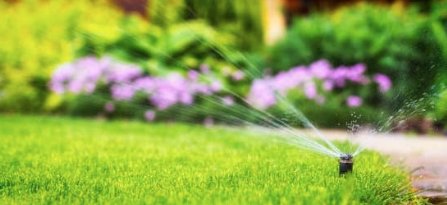
To support responsible water use—especially during the warmer months—the Town of Petawawa has set watering guidelines based on municipal By-law. These rules help ensure our shared water system can meet everyone’s needs, especially during peak times.
When you Can Water:
The Town of Petawawa follows a watering schedule based on your home’s street address.
Please note: Outdoor watering days are based on your home’s street number — check the last digit to determine your assigned days.
When You Can Water:
Permitted hours: 6:00 a.m. – 9:00 a.m. and 6:00 p.m. – 9:00 p.m.
Even-numbered addresses: Water on even calendar days (e.g. 2, 4, 6…)
Odd-numbered addresses: Water on odd calendar days (e.g. 1, 3, 5…)
New sod or seed?
You’re welcome to water on both odd and even numbered days for up to 14 days to help it establish. If possible, please try to water during the usual permitted hours.
Let us know when you begin watering—this helps avoid any confusion and ensures you’re not mistakenly cited for overuse.
Prevent Frozen Water Lines
Frozen pipes occur when frost permeates deep into the ground and surrounds the pipe as a result of extended exposure to extreme cold, or a fluctuation between warm and cold temperatures. If your service pipe has frozen in the past, your pipes are vulnerable to freezing again each winter as the temperature continues to drop.
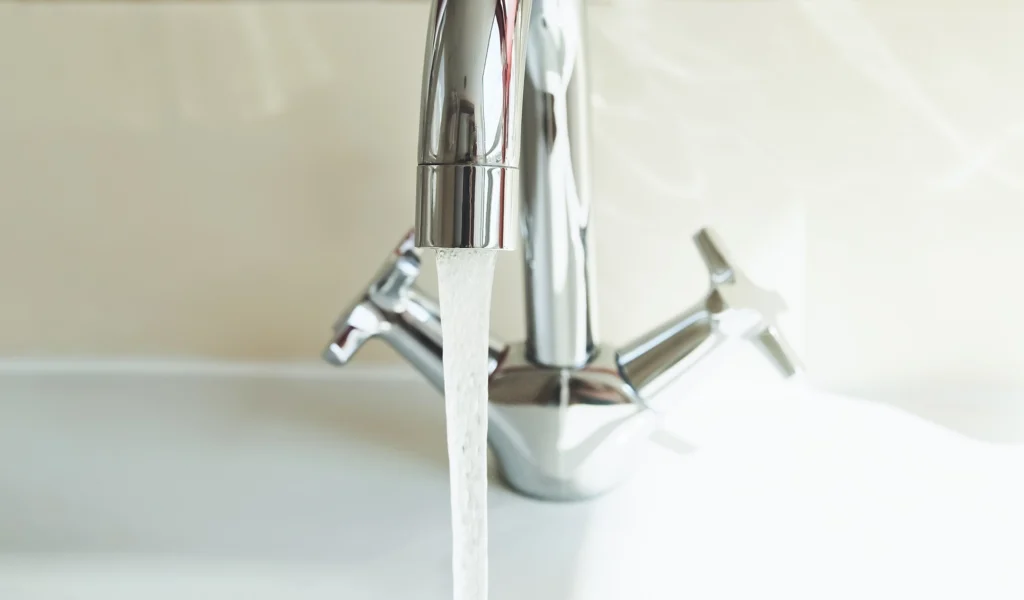
In order to reduce the risk of a frozen water service, it is advised that you leave a cold water tap running at a steady stream until mid-April. Do not prematurely shut the water off, as it may result in freezing. The water stream should be the approximate thickness of a pencil. Hot water will not be affected and should not be left running. Please be sure to check your drain in the sink and assure that it will not block up due to the constant flow.
The Town advises people with septic systems to divert water streams so as not to fill septic systems. This can be done using a garden hose, directed away from the home. Monitor your water flow to watch for freezing and/or the creation of unsafe icy conditions and/or other damage. If you are planning on being away during the winter, have someone check your home regularly.
For questions concerning your water service, please contact the public works department, see our Contact Directory page